PROTO-CINEMA BLOG 20: CHRONOPHOTOGRAPHY

I really like Muybridge-style photography. I think my original interest in his photography/study of horses in motion has something to do with the development of my obsession of photography contact sheets. I like the idea of related/sequential images being presented together in the same sheet.

With that in mind, I decided I would present my photos side-by-side like Muybridges’s original horse photography.

I looked up how to take sports/burst photos on my iPhone since my model doesn’t have a sports setting programmed. After a bit of looking, I discovered all you have to do is hold down the button that takes the photo and the phone just keeps taking photos until you stop.

I did my photos of bowling, because I thought the pins flying would make a good photo. I’d like to eventually overlay the photos in Gimp to make a fun single image, but that would take me a long time to figure out, so I’m sticking to my initial plan of presenting them side-by-side.

It took me a few tries to get a usable photo. Originally, I tried to bowl and take the photos myself, but soon discovered that it is impossible to get the phone into position and the image zoomed and in focus before the ball impacted the pins. Thus, I enlisted the owner of the bowling alley in the Student Center to bowl and let me take the photos. Thus, here’s my series of photos:
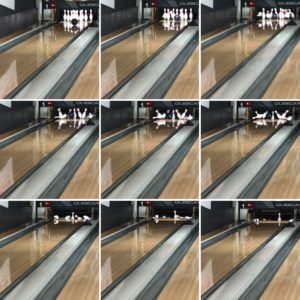
 

Figure 1: Bowling Chronophotography

PROTO-CINEMA BLOG POST 18: STEREOSCOPIC SLIDES

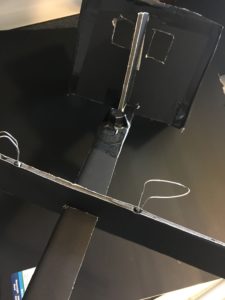
I made the viewer out of two types of black poster board: thin (regular) poster board and the padded (reinforced) poster board. I also used paperclips, duct tape, and a marker (as the handle).

Figure 1: Stereoscopic Slide Viewer


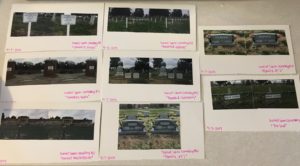
For the slides, I made a set of slides of Sunset Lawn Cemetery in Harrisburg, IL. I thought it was a nice ambiance and recreated many artifacts made during the height of spiritualism. Many trick photography, magic lantern, and stereoscopic slides sets dealt with the mystical or dreadful.


Figure 2: Slides


PROTO-CINEMA BLOG POST 17: THAUMOTROPES AND FLIPBOOKS

I don’t have my objects as I write this, we turned them in during the last class period. So, I will attempt to describe these as accurately as possible.

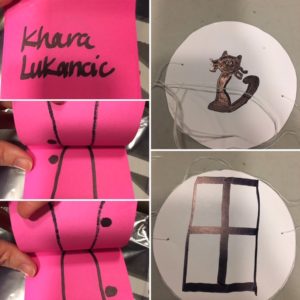
For my thaumotrope, I traced the opening of a mason jar on a piece of white cardboard. I drew a cat on one side and a window on the other, the image should look like a cat peering out the window. The “string” I used was some dental floss, I didn’t have another usable string. I tried thread but it didn’t work very well.

For the flipbook, I created about 30 images on post-it notes of a ball rolling up and down a hill. I glued the post-it notes together to make them more permanently connected.

Figure 1: Collage of my flipbook and thaumotrope

PROTO-CINEMA BLOG 16: MAGIC LANTERN

To figure out how to make a magic lantern, I read a lot of material. Including the readings from Virginia, the Magic Lantern Society, and The Historian’s Toybox.

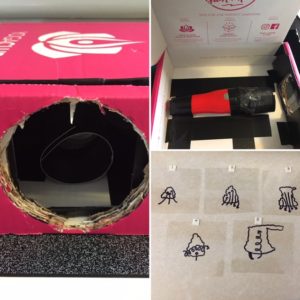
Ultimately, I decided to make my magic lantern out of a box. Within a few days of the assignment, my Yoga Club subscription box arrived and it seemed like a perfect box to convert into a magic lantern. So that’s what I did. I cut a hole on one end and taped a LED flashlight inside. When I practiced with this, it wasn’t projecting my slides very well.

So, I showed it to you and you suggested I add craft paper or something to help focus the light of the flashlight. It made it darker, but the slides still appear blurry. Not sure what can be done about that.


Figure 1: A collage of my magic lantern and slides

PROTO-CINEMA BLOG 15: UPDATED CAMERA OBSCURA

Original camera obscura:

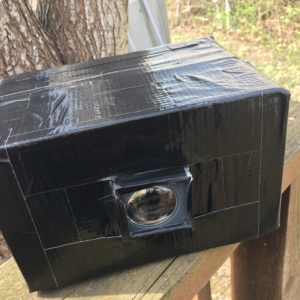
Figure 1: Front of original camera obscura


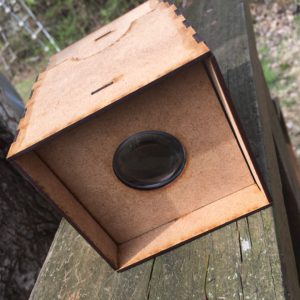
Figure 2: Back of original camera obscura


Blog post about making the original camera obscura: https://kharalukancic.hcommons-staging.org/2019/02/18/proto-cinema-blog-9-camera-obscura-creative-process/

Model camera obscura:

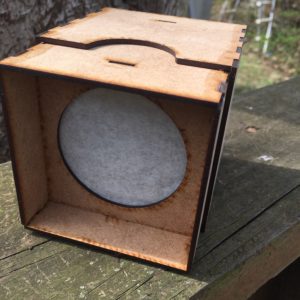
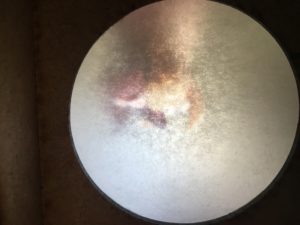
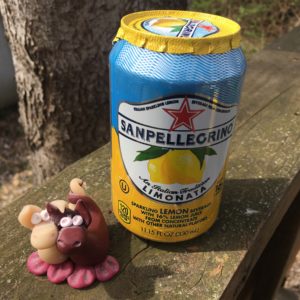
I tried modifying the original camera obscura multiple times and I just couldn’t make it work. I can’t get it to show a discernible image on the tracing paper viewer. I think perhaps the lens of the magnifying glass might be the problem. So, I found a model kit and made it. Here it is below:


Figure 3: Front of model


Figure 4: Back of model


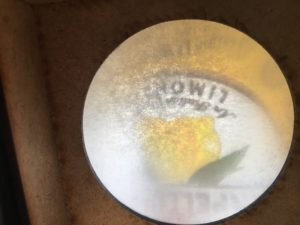
Figure 5: Used a garbage bag to block light so I could get an image to photo


Photos:

Figure 6: Image 1 – a can


Figure 7: Image 2 – a clay figurine


Figure 8: Objects in the images

PROTO-CINEMA BLOG 14: PANORAMIC PHOTO CREATIVE PROCESS

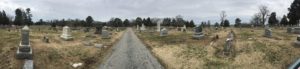
For this one, I wanted to take a panoramic photo of the cemetery that I live by.  I ended up taking a few photos from additional locations as well.

To do these, I used the camera app on my phone.

Figure 1: Panoramic Photo of Sunset Lawn Cemetery in Harrisburg, IL


Figure 2: Another shot of Sunset Lawn Cemetery


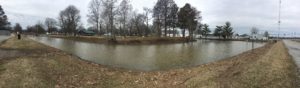
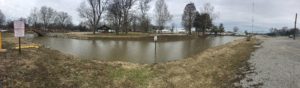
Figure 3: The Pond at Harrisburg Park District


Figure 4: Another one of the pond (I was trying to get a shot of all the ducks, but they kept avoiding my shot)


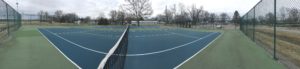
Figure 5: Tennis Court Distortion at Harrisburg Park District

PROTO-CINEMA BLOG 13: PANORAMAS

The two panorama readings connect panoramas to other artistic media: Melissa Gniadek connects them to serial fiction, while Allison Griffiths connects them to early cinema.

In “Seriality and Settlement,” I am particularly interested in the way in which Gniadek connects panoramas to serial fiction. The most interesting connection she makes is when she’s talking about how readers of serial fiction can follow from cliffhanger chapter endings and out of nowhere chapter beginnings, when the author leaves out the narrative information occurring in between. She compares this to the viewers of panorama, who transition from scene to scene without any transitional information.

“Shivers Down Your Spine” offers a history of panoramas, including things we talked about in class: Robert Barker’s building and cycloramas. Then, she goes on to link panoramas to early cinema, in a fairly convincing manner. The strongest link she makes is the comparison to documentary panoramas with early cinematic news reels. While, the most intriguing exploration is in reception and the gendered audience.

PROTO-CINEMA BLOG 12: PINHOLE CAMERA CREATIVE PROCESS

For this project, we were instructed to find a box that we could make completely light-tight. I immediately thought of an Apple box.

Thus, I decided to use the box from my Apple iPad Pro as my pinhole camera.

Additionally, I deliberately decided to keep the box as much as I could in tact; that is, I didn’t decorate it or cover up its logos. I like the idea of making my hands-on, amateur, inaccurate, and slow photography object out of the box of a piece of technology known for its precision and excellence. Something about taking a pinhole photo using the box for the iPad Pro, with all its retina technology, is very amusing.

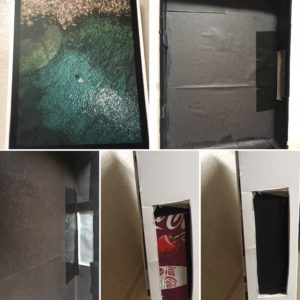
So, I took my iPad Pro box and lined the inside with black paper (given to us in class). I then cut a square on the side of the box and taped a piece of a pop can over the cut square. I then pierced the aluminum with a needle and used the left over cut out piece of cardboard to cover the pinhole.

Figure 1: Collage (from my iPhone, humorously enough) of my finished pinhole camera. [Top row (left to right): Outside of box, inside of box with black paper. Bottom row (left to right): Cut opening with can and pinhole, same space from the outside, same space with the cardboard pinhole cover in place.]

Michael Potter, in our readings for this week says, “Quite often I find that surprise, delight and disappointment are all swirling around at the same time” [of the pinhole photography creative process]. I found myself identifying with this a great deal during my first time out taking a photo.

I went to the Japanese Garden outside of Faner to take my photo. It had all the promise of any unknown undertaking. I was excited to find out how the photo in my head as I was taking the photo would hold up to the reality of what was captured. Turns out, to my disappointment (but not so much surprise) my photo was underexposed and nothing is visible. It’s simply black.

Figure 2: Attempted photo of Japanese Garden and information about the photo

PROTO-CINEMA BLOG 11: PINHOLE CAMERAS

What I liked most about the two readings this week were the very different ways that both articles collide disparate things. Michael Potter combines pottery and photography, while Marissa Fessenden’s article about David Janesko and Adam Donnelly combines nature and photography.

Potter’s article offered an overview of the history of pinhole cameras. He starts with the history of the camera obscura and then introduces the uses of pinhole cameras. The article adds an interesting component by talking about the technical differences to consider while making a pinhole camera: he talks about how drilled versus hand-made shims affect the quality of the image (p. 53).

I found the Fessenden article fascinating. As a person who switched from a science to humanities discipline, I’m always thinking about how to merge my two paths. Here, she talks about how David Janesko and Adam Donnelly make art from nature, and this intrigues the part of my brain that studied the environment for so many years.

I find the description of their photography to be very interesting. The article calls their photographs “dreamy” or “misty” in appearance. Later in the article, she talks about their creative process, explaining that often one of the photographers are inside the camera holding the photographic paper up to the pinhole. Just from our conversations in class, this makes me think of just how blurry theses photos must be.

However, the connection between art and nature is what I keep coming back to when reflecting on this article. I especially love the closing sentence: “After they’ve left, the weather and passing creatures (sometimes humans) help it succumb, quickly or slowly but always inevitably, to nature’s whims.”